NFL Betting Systems: Data-Backed Strategies That Actually Work
 Available in US
Table of Contents
- Introduction
- What This Guide Covers — and Why It Matters for Your Bankroll
- NFL Betting Systems vs. Trends: Why the Distinction Matters
- Point Spread Systems: Where Most Edges Hide
- Underdog Betting Systems: Fading the Public for Profit
- Bankroll Management and Staking Plans: The Maths Behind Survival
- Live Betting Systems: Exploiting In-Play Market Overreactions
- Totals (Over/Under) Systems: Where Sharp Money Goes Quiet
- How to Backtest an NFL Betting System Before Risking Real Money
- NFL Betting Systems for UK Punters: Odds Formats, UKGC Rules and London Games
- Responsible Gambling: Why Every System Needs a Stop-Loss
- Frequently Asked Questions About NFL Betting Systems
Introduction
Thirty billion dollars. That is the estimated legal handle on NFL betting in the United States during the 2025 season alone — and it does not include the rapidly expanding UK market, the offshore books, or the countless informal wagers placed between mates at the pub. The NFL is the single largest betting event cycle on Earth, and every September through February, millions of punters convince themselves that this is the year they crack it.
Most of them are wrong. The veteran handicapper Dan Gordon put it bluntly: fewer than one bettor in twelve turns a profit over a full season. Stretch that window to multiple seasons and the number shrinks further — somewhere between three and five per cent of all sports bettors manage to stay in the black long-term. That is not a guess. That is the consensus across industry data, academic research and the hard lesson I have learned watching nine years’ worth of bankrolls evaporate around me.
So why does anyone bother? Because that three-to-five per cent exists. And when you study what separates them from the other ninety-five, one pattern emerges over and over: they do not gamble on feelings. They bet on systems — repeatable, rules-based frameworks with defined entry criteria, documented track records and, crucially, a mathematical edge that has been verified across multiple seasons of data.
I have spent the better part of a decade doing exactly that: building, testing and refining NFL betting systems. Not tipster picks. Not gut-feel handicapping. Systems — the kind you can write down on a napkin, hand to someone else, and they would place the same bets you would, every single week. Some have made me money. Others have taught me expensive lessons about survivorship bias and the difference between a genuine edge and a data-mining artefact.
This guide is the distillation of all of it. Every system I cover has multi-season data behind it. Every claim comes with a sample size. And because I am writing primarily for UK-based punters increasingly drawn to NFL markets — Super Bowl audiences among under-35s in Britain surged 91% year on year — I will walk you through the practical realities of applying these systems from this side of the Atlantic: decimal odds, UKGC regulations, London game quirks and all. No affiliate links. No “best bookmaker” rankings. Just the data, the maths and the frameworks that hold up when you test them properly.
What This Guide Covers — and Why It Matters for Your Bankroll
- Only 3-5% of sports bettors profit long-term — the difference is systems over gut feel. Every system here has multi-season data and a defined causal mechanism behind it.
- Three spread-based systems have survived rigorous backtesting: road favourites post-bye (59.1% ATS), divisional underdogs (53.8% ATS) and low-total underdogs (57.7% ATS). Each has 150+ games of data across 5+ seasons.
- Bankroll management is not optional. The Wharton School found full Kelly Criterion staking leads to ruin in 100% of simulations — half-Kelly is the professional standard.
- UK punters have unique edges: London game travel-fatigue dynamics, early-line arbitrage windows and a regulatory framework (UKGC statutory levy 2025) that shapes the landscape.
- Backtest everything. Minimum threshold: 200 games, 3 seasons, out-of-sample validation. If a system cannot survive that filter, it is a trend, not an edge.
NFL Betting Systems vs. Trends: Why the Distinction Matters
Early in my career I blew an entire month’s profit chasing a trend that looked bulletproof on paper: home teams coming off a loss were covering at 58% over the previous two seasons. I loaded up, bet it for six straight weeks, and watched it crater to coin-flip territory. The problem was not the data. The problem was that I had confused a trend with a system — and that confusion costs more bettors money than bad luck ever will.
System — a reproducible set of rules with a defined causal mechanism, tested across a statistically significant sample (200+ games, 3+ seasons minimum), producing a measurable edge over the closing line. A system answers not just “what happens” but “why it happens.”
Trend — an observed correlation in historical data without an established causal link. Trends describe patterns; systems exploit inefficiencies. A trend might tell you that Team X is 7-2 ATS on Thursday nights. A system tells you why Thursday-night underdogs with specific rest differentials cover at a statistically significant rate across 15 years of data.
The distinction matters because trends decay. They are often the product of small samples, random variance or conditions that no longer exist. A system, by contrast, is anchored to a structural market inefficiency — something about the way bookmakers set lines, the way the public bets, or the way NFL scheduling creates predictable mismatches. When you understand the mechanism, you can monitor whether the conditions that created the edge still exist. When you are just following a pattern, you are flying blind.
Academic research backs this up. A study by Corey Shank examining fourteen NFL seasons from 2003 to 2016 identified profitable strategies on point spread and totals markets that achieved a win rate around 57%. The key finding was not the win rate itself — it was that the profitable strategies were all rooted in identifiable market inefficiencies, not in historical quirks. Divisional rivalries, for instance, consistently produced tighter contests than the spread implied, because bookmakers underestimated how familiarity between coaching staffs compresses the talent gap.
Jeff Hochman, an NFL betting analyst who has built a career on system verification, focuses exclusively on systems with a proven track record and a win rate of at least 60%. That threshold is deliberate: it filters out the noise of trends and isolates systems with enough historical depth to be taken seriously.
Trend Example
“NFC North underdogs are 12-5 ATS in December since 2022.” Small sample (17 games), no causal mechanism, cherry-picked division and month.
System Example
“Divisional underdogs have gone 314-270 ATS (53.8%) since 2019, driven by coaching familiarity and compressed margins.” Large sample (584 games), identifiable causal mechanism, consistent across seasons.
For UK punters, there is another layer. The word “system” in British betting culture often conjures images of tipster services — paid picks delivered to your inbox every Sunday. That is not what I mean. A tipster sells opinions. A system is a framework you own, understand and can verify yourself. If you cannot explain why a system works in two sentences, you do not have a system. You have a subscription.
Every system I cover in the sections that follow passes three tests: a causal mechanism, a statistically significant sample size and multi-season out-of-sample validation. Anything that fails even one gets filed under “interesting trend” — and I do not bet on interesting trends.
With the framework clear, let’s look at where the most durable edges actually live — starting with the market that handles more NFL money than any other.
Point Spread Systems: Where Most Edges Hide
The spread is where I started, and after nine years it remains the market I trust most. Not because it is easy — the opposite, actually — but because point spread markets have the deepest liquidity, the longest historical datasets and the most well-documented inefficiencies of any NFL betting market. If you are going to build a system, this is where the raw material lives.
Three spread-based systems have survived my backtesting filters. Each has a sample size above 150 games, spans at least five seasons and is rooted in a structural market inefficiency I can explain in plain English. Here is the overview — for the granular breakdowns, worked examples and UK-specific application, I have written a dedicated deep dive into NFL spread betting systems.
Road Favourites Post-Bye
Record: 94-63-4 ATS since 1999 (59.1%)
ROI: +15.7% (+24.7 units)
Sample: 161 games over 25 seasons
Complexity: Low — single filter
Divisional Underdogs ATS
Record: 314-270 ATS since 2019 (53.8%)
ROI: +3.4%
Sample: 584 games over 6 seasons
Complexity: Low — division + underdog filter
Low-Total Underdogs
Record: 205-150-10 ATS since 2018-19 (57.7%)
ROI: varies by sub-filter
Sample: 365 games over 7 seasons
Complexity: Medium — total threshold + underdog + optional division filter
The road favourites post-bye system has the cleanest edge I have seen in NFL data. The logic is straightforward: a team coming off a bye week is rested, has had two weeks to game-plan, and is talented enough to be favoured despite playing away from home. The market, however, tends to overweight home-field advantage and underweight the rest differential. The result is a spread that is consistently too wide — and a 59.1% cover rate that has held across two and a half decades of data.
Divisional underdogs exploit a different inefficiency. When teams in the same division meet twice every season, the underdog’s coaching staff has deep familiarity with the opponent’s schemes and personnel tendencies. That familiarity compresses the expected margin. Non-divisional underdogs over the same period covered at just 50.5% — a coin flip. The 3.3 percentage point gap is consistent, measurable and grounded in a mechanism that is not going away.
The third system layers filters. Underdogs in games where the total is set at 42 points or fewer have covered at 57.7% since the 2018-19 season. Stack the divisional filter on top and the number climbs to 59.6% across 145 qualifying games. Low-total games neutralise the favourite’s offensive firepower, and defensive battles produce tighter margins than the spread anticipates.
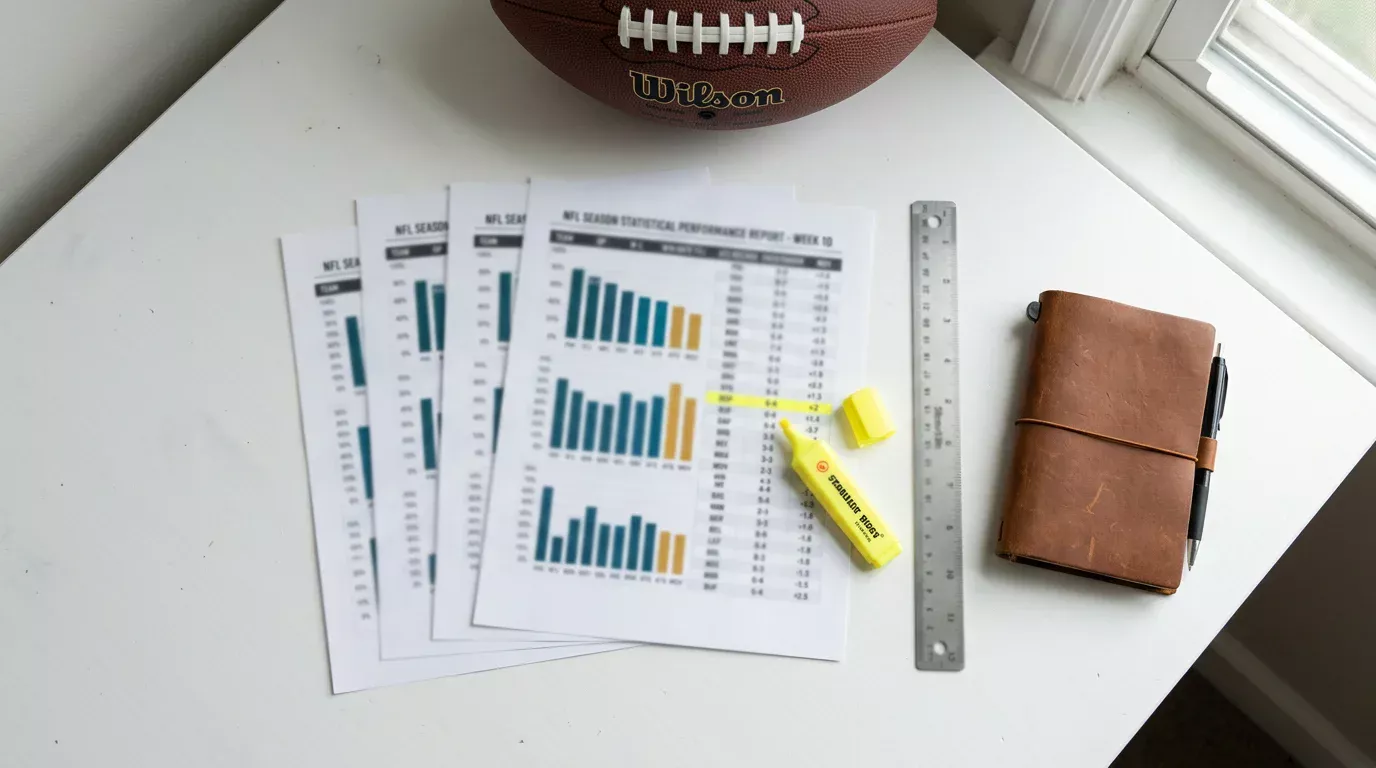
Worked Example: One Season of Road Favourites Post-Bye
Suppose you set your unit size at 10 pounds and the 2025 season produces 8 qualifying games (road favourites coming off a bye). At the historical 59.1% cover rate, you would expect roughly 4.7 wins and 3.3 losses out of those 8 bets.
Each win at standard decimal odds of 1.91 returns 9.10 pounds profit. Each loss costs 10 pounds.
Estimated season result: (4.7 x 9.10) – (3.3 x 10.00) = 42.77 – 33.00 = +9.77 pounds profit on 80 pounds staked.
That is a 12.2% ROI on a tiny sample within a single season. The edge is modest per bet, but it compounds across years — and it requires almost no analytical effort beyond checking the schedule.
A word of caution: none of these systems is a money printer. A 53.8% win rate means you still lose 46.2% of the time. Losing streaks of five or six bets happen regularly. The edge only materialises over hundreds of bets — not over a single weekend. That is why bankroll management is not optional.
Spread systems thrive on structural inefficiencies in how markets price favourites. But the single biggest structural bias in NFL betting is not about spreads — it is about which side the public chooses.
Underdog Betting Systems: Fading the Public for Profit
I used to be a favourite bettor. Most people are when they start — you back the team you think will win, which is almost always the team with the bigger name, the flashier quarterback, the better record. It took me two losing seasons to realise I was doing exactly what the bookmakers wanted me to do.
Here is the uncomfortable truth about NFL betting: the public overwhelmingly backs favourites. Media coverage, primetime scheduling, fantasy football name recognition — all of it funnels casual money toward the same side. Bookmakers know this, and they shade their lines accordingly, building in a small tax on the popular side. The result is a persistent, measurable mispricing of underdogs — particularly in spots where the public’s bias is strongest.
Divisional Underdogs
314-270 ATS (53.8%, +3.4% ROI) since 2019
Non-divisional underdogs over the same period: 520-509 ATS (50.5%)
The gap is consistent and driven by scheme familiarity
Low-Total Divisional Underdogs
84-57-4 ATS (59.6%) when the total is set at 42 or below
The strongest sub-filter in underdog betting
Defensive games compress margins and punish overpriced favourites
Why do underdogs cover? Not because they win outright more often than expected, but because the spread is set to attract balanced action. When the public loads up on the favourite, the line moves beyond what the team’s actual probability warrants. The underdog does not need to win — it just needs to lose by less than the inflated spread. In divisional games, where coaching familiarity neutralises talent gaps, that happens at a rate significantly above break-even.
A team of researchers from Czech Technical University captured this dynamic perfectly when they wrote that a worse prediction model paired with a better strategy can easily outperform a better model paired with a worse strategy. The underdog system is not about predicting winners. It is about identifying where the market’s pricing mechanism breaks down — and the public’s favourite bias is one of the most reliable breakdowns in all of sports betting.
In 2024, US bookmakers retained $13.71 billion from $149.8 billion in total handle — a hold rate of 9.3%. A significant portion of that margin comes from parlay products and public-side spreads, where casual bettors hand the house its biggest edge.
The practical question for UK punters is how to access the data that makes underdog systems actionable. Public betting percentages, reverse line movement indicators and ATS records are all freely available from US-focused analytics sites. I cover the specific tools, timing and UK bookmaker considerations in my complete guide to NFL underdog betting systems.
One thing I want to stress: underdog betting is not a licence to blindly back every dog on the board. Unfiltered underdogs across all NFL games cover at roughly 50% — break-even before the vig. The filters are the system. Without them, you are flipping coins with a 4.76% commission.
Bankroll Management and Staking Plans: The Maths Behind Survival
The best system I ever built had a verified 58% hit rate over four seasons. I still nearly went broke running it, because I was staking 10% of my bankroll per bet and hit a nine-game losing streak in October. Nine losses at 10% each and you are down to 39% of your starting capital. At that point, the maths of recovery becomes brutal: you need a 156% gain just to get back to where you started. I learned more about bankroll management from that three-week stretch than from any textbook.
Unit — a standardised bet size, typically 1-3% of your total bankroll. If your bankroll is 500 pounds, one unit at 2% equals 10 pounds. Every bet is expressed in units, never in absolute amounts. This keeps your exposure proportional to your capital and prevents the emotional escalation that destroys bankrolls.
The foundational number every NFL bettor needs to internalise is 52.38%. That is the break-even win rate at standard -110 odds (or 1.91 in decimal). Anything below that and you are losing money regardless of your staking plan. Anything above it and the question becomes: how do you size your bets to maximise long-term growth without risking ruin?
The most famous answer is the Kelly Criterion — a formula developed by John Kelly at Bell Labs in 1956 that calculates the mathematically optimal bet size based on your edge and the odds offered. The formula is elegant: f* = (bp – q) / b, where b is the decimal odds minus 1, p is your probability of winning and q is the probability of losing. For a 55% system at 1.91 odds, Kelly recommends staking roughly 5.5% of your bankroll per bet.
Kelly Criterion Calculation
Your estimated edge: 55% win rate on bets at decimal odds 1.91
b = 1.91 – 1 = 0.91
p = 0.55, q = 0.45
f* = (0.91 x 0.55 – 0.45) / 0.91 = (0.5005 – 0.45) / 0.91 = 0.0555
Recommended stake: 5.55% of bankroll per bet
On a 500 pound bankroll: 27.75 pounds per bet

Here is where it gets dangerous. Research from the Wharton School ran thousands of simulations applying the full Kelly Criterion to sports betting and found that it led to bankruptcy in 100% of cases. Every single simulation. The reason is that Kelly assumes you know your true edge with certainty — and in NFL betting, you never do. Your 55% estimate might actually be 52% or 48%. Full Kelly amplifies estimation errors into catastrophic drawdowns.
The Half-Kelly Rule
The Wharton research found that halving the Kelly recommendation — betting 2.75% instead of 5.5% in the example above — produced optimal results, with a potential annualised return of approximately 80% over an eleven-year simulation period. Half-Kelly sacrifices some theoretical growth for a massive reduction in ruin probability. This is the approach I use and the one I recommend to every serious NFL bettor.
For punters who find Kelly too complex or who do not trust their edge estimates, flat staking is the simplest alternative: bet the same fixed amount every time, typically 1-2% of your starting bankroll. You will not maximise growth, but you also will not maximise drawdowns. I have seen bettors with genuine 56% edges go bust because they were using proportional staking with overestimated confidence. I have never seen a flat-staker with a real edge go bust. The boring approach has a lot to recommend it.
Whichever method you choose, the underlying principle is the same: your staking plan is not a secondary concern. It is the primary determinant of whether your edge translates into profit or ruin. I explore the full mathematical framework, including flat versus proportional staking comparisons and practical spreadsheet templates, in my complete guide to NFL bankroll management.
Live Betting Systems: Exploiting In-Play Market Overreactions
Two years ago I watched a Sunday afternoon game where the underdog returned the opening kickoff for a touchdown. Within 90 seconds of real time, the live spread swung by four and a half points. The pre-game line had been set by sharp analysts with access to every data point imaginable. The live line was being repriced by an algorithm reacting to a single play. That gap — between the considered pre-game assessment and the emotionally reactive live market — is where live betting systems find their edge.
Live betting is no longer a niche product. It accounts for 62.35% of the global sports betting market share in 2025, and mobile platforms have made it the default way younger bettors engage with NFL games. In the UK, where 76% of bettors aged 18 to 24 wager exclusively on their phones, an NFL Sunday means four to five hours of continuous live betting opportunities between 6pm and 11pm GMT.
Overreaction Window
60-120 seconds after a scoring play or turnover
Live algorithms reprice based on score change, not game context
Contrarian entry against the emotional shift
Halftime System
Teams trailing by 7-14 points at halftime
Second-half coaching adjustments and mean reversion
Separate market from pre-game — distinct pricing
The structural inefficiency in live markets is speed. Pre-game lines benefit from days of sharp money and model projections. Live lines adjust in real time to events that carry enormous emotional weight but limited predictive value. A pick-six in the first quarter does not change the fundamental talent gap between two teams, but it shifts the live spread dramatically. Systems that bet against the emotional swing exploit a genuine market flaw — one unlikely to disappear because the algorithms are built to manage risk, not find value.
Speed Is Not Your Friend
The same mobile interfaces that make live betting accessible also make it dangerous. FanDuel’s single-tap bet slip increased mobile wagering by 22% year on year during the NFL season. That frictionless experience is designed to capture impulse bets — the exact opposite of systematic betting. If you are going to trade live NFL markets, pre-define your entry criteria before kickoff. Decide which overreaction scenarios warrant a bet, set your unit size and do not deviate. The system protects you from yourself.
I will be direct about something: live betting systems are harder to execute than pre-game systems. The windows are narrow, the lines move fast and the temptation to chase is constant. I have a detailed breakdown of specific live entry points, halftime strategies and the bankroll rules I apply specifically to in-play wagers in my NFL live betting strategy guide. If you are new to systematic betting, start with pre-game systems. Live markets reward discipline that most bettors have not yet built.
Totals (Over/Under) Systems: Where Sharp Money Goes Quiet
Ask a casual NFL bettor about their last wager and they will almost certainly tell you about a spread bet or a moneyline. Ask a sharp and there is a good chance they will mention a total. The over/under market is the quietest profit centre in NFL betting — less glamorous than picking winners, less talked about on social media, and significantly less efficient than the public realises.
Warren Sharp, whose NFL analytical work spans nineteen years, has maintained a documented win rate between 57% and 63% on totals selections, with an overall record of 612-456 through the 2025 season. Those numbers are exceptional for any market, but they are almost unheard of for spread betting, where the sharpest in the business hover around 55-57%. The totals market is where the gap between sharp and public is widest — and the reason is psychology.
Weather Unders
Games with wind above 15mph, temperature below freezing, or significant precipitation
16 of 30 NFL stadiums are outdoor venues
Weather data is public, free and underweighted by recreational bettors
Sharp vs. Public Totals Split
Public bias: overs (fans want high-scoring, exciting games)
Sharp bias: unders (systematic, data-driven, less emotional)
Line movement against public percentage = sharp indicator
The public bets overs. That is one of the most consistently documented biases in sports betting. People watch NFL football for touchdowns and offensive fireworks, and when they bet, they bet on what they want to see. This creates a structural tilt: bookmakers shade totals slightly higher than the true expectation to attract over money, which means the under is persistently underpriced.
Worked Example: Weather Under in a Divisional Matchup
A Week 14 NFC North game is set at a total of 43.5. The forecast shows sustained 18mph winds with gusts to 25mph and a temperature of -2 degrees Celsius.
The under at decimal odds of 1.91 means a 10 pound stake returns 19.10 on a win (9.10 profit).
If your model assigns 58% probability to the under in these conditions: (0.58 x 9.10) – (0.42 x 10.00) = 5.28 – 4.20 = +1.08 pounds per bet. That is 10.8% expected ROI — well above the threshold for a systematic bet.
The weather angle is the most accessible totals system for beginners because the data is public, free and easy to interpret. Wind speed, temperature and precipitation forecasts are available days before kickoff. You do not need a PhD in meteorology — you need a threshold (I use 15mph sustained wind as my primary trigger) and the discipline to only bet games that meet it.
Beyond weather, totals systems draw on pace metrics (plays per game, time of possession), efficiency data (EPA per play, success rate) and seasonal patterns. Early-season games tend to go over as offences are ahead of defences in their preparation cycles; late-season games trend under as defensive adjustments accumulate and cold weather sets in. I break down all of these angles, including the specific totals data from NFL London games, in my complete totals betting system guide.
How to Backtest an NFL Betting System Before Risking Real Money
I have a folder on my laptop labelled “Dead Systems.” It contains fourteen NFL betting systems that looked profitable in backtesting and failed within two seasons of live deployment. Every single one had a positive ROI in-sample. Every single one had a reasonable thesis. And every single one turned out to be a product of data-mining bias, an artefact of a small sample, or a genuine edge already priced out by the market.
That folder taught me that backtesting is not about finding systems that worked in the past. It is about building a process that distinguishes real edges from statistical noise before you stake real money on the difference.
Backtest Validation Checklist
- Sample size: minimum 200 qualifying games across at least 3 full NFL seasons
- Out-of-sample validation: test on data the system was not built on (e.g., build on 2010-2019, test on 2020-2025)
- Causal mechanism: can you explain why this edge exists in two sentences?
- Closing line comparison: does the system consistently beat the closing line, or only the opening line?
- Multiple hypothesis correction: if you tested 20 filters to find this one, your significance threshold must be much stricter
- Survivorship bias check: are you only looking at systems that survived, ignoring the ones that did not?
- Market regime change: have the conditions that created this edge changed (rule changes, new betting markets, increased sharp participation)?
The Allen Eastman 411 System is one of the few publicly documented examples of a properly backtested NFL system. Eastman tracked 395 qualifying games across 13 NFL seasons from 2008 to 2020 and achieved a 58% hit rate. That is noteworthy not because 58% is an extraordinary number — it is good, not miraculous — but because the sample size (395 games), the time span (13 seasons) and the documentation make it one of the most transparent system backtests in the public domain. Most systems you will encounter online are tested on two or three seasons and 40 to 60 games. That is not a backtest. That is an anecdote.
Do
- Use out-of-sample testing: build your system on one set of seasons, validate it on seasons it has never seen
- Track closing line value as well as win rate — CLV predicts long-term profitability better than short-term results
- Apply a minimum 200-game, 3-season threshold before considering any system validated
- Document every system you test, including failures — they teach more than successes
Don’t
- Cherry-pick your sample period to maximise results — if it only works in 2017-2019, it is a trend
- Test dozens of filters and present the best one as your only hypothesis — that is data-mining
- Ignore the vig: the standard 4.76% commission at -110 must be factored into every backtest
- Assume past performance guarantees future results — edges decay as markets adapt

The biggest gap in NFL betting content is that almost nobody teaches backtesting methodology. Sites tell you what systems to bet. Almost none teach you how to verify whether those systems are real. Never bet a system you have not backtested yourself. The process is not glamorous, but it is the single most effective defence against losing money on someone else’s data-mining exercise.
NFL Betting Systems for UK Punters: Odds Formats, UKGC Rules and London Games
When I first started applying US-centric NFL systems from a UK base, the biggest surprise was not the odds format or the time zones. It was the information gap. Almost every piece of NFL betting analysis is written for American audiences using American odds (-110, +150), referencing American sportsbooks and assuming you are placing bets at 1pm Eastern on a Sunday afternoon. None of that maps cleanly onto the UK experience — and the differences are not just cosmetic.
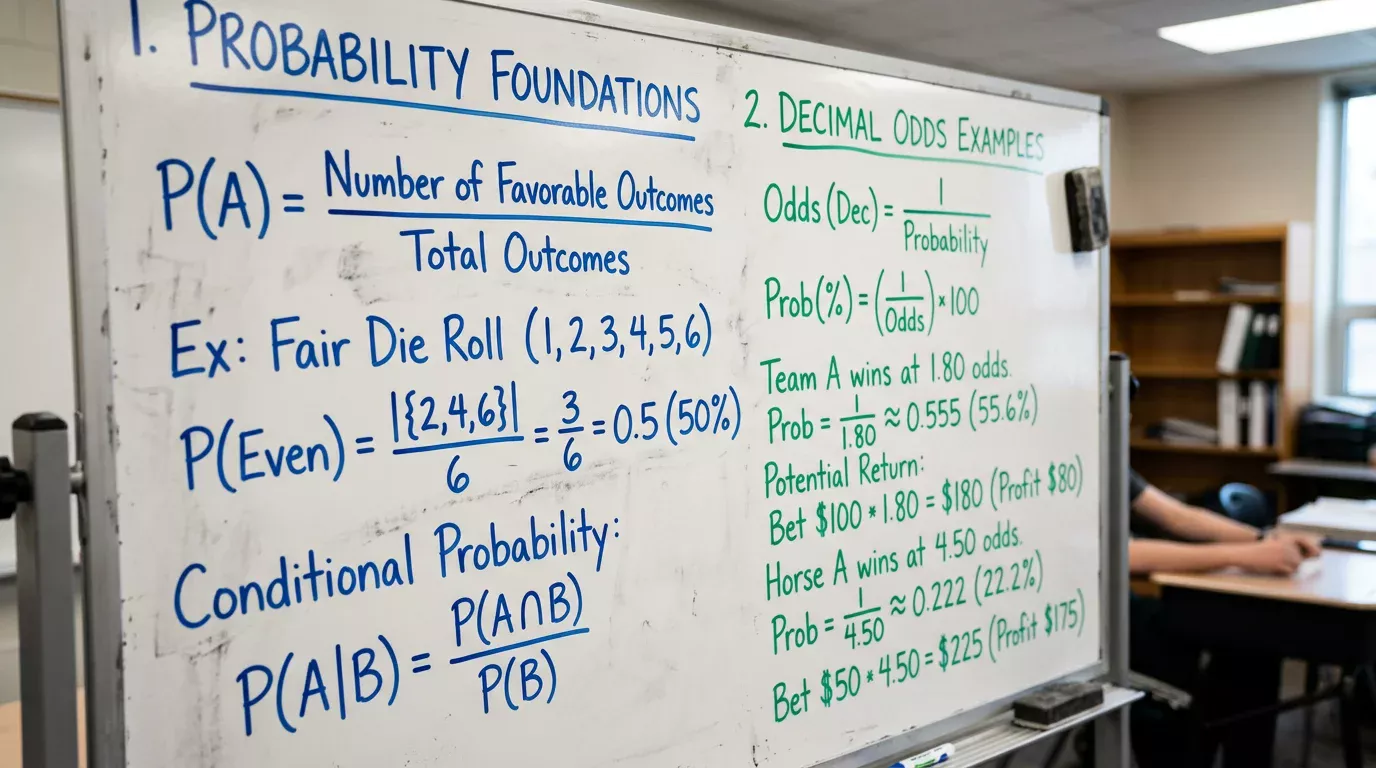
Decimal vs. American Odds — UK bookmakers display NFL odds in decimal format by default. American odds of -110 (the standard vig line) translate to 1.91 in decimal. American odds of +150 (a moderate underdog) translate to 2.50. The conversion is straightforward: for positive American odds, divide by 100 and add 1. For negative American odds, divide 100 by the absolute value and add 1. Every system calculation in this guide uses decimal odds.
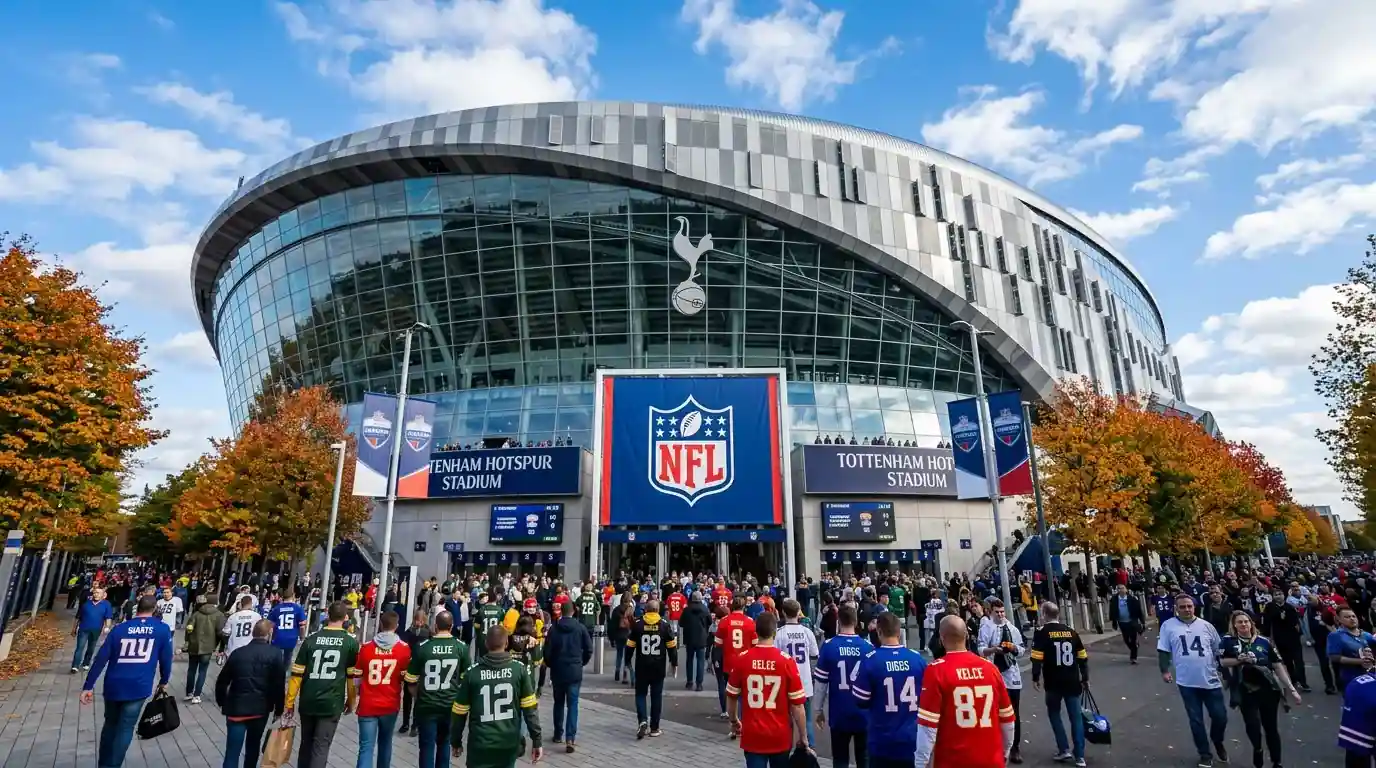
The UK sports betting market generates approximately 2.48 billion pounds in annual gross gaming yield, with a projected trajectory toward $21.3 billion by 2030. NFL is a growing vertical within that market, driven by the league’s aggressive UK expansion strategy. Henry Hodgson, the NFL’s General Manager for the UK and Ireland, has emphasised the league’s proud history in Britain, with regular season games played in London since 2007. Over 28 London fixtures have drawn a cumulative attendance exceeding 2.2 million fans, with an average crowd of 80,941.
For system bettors, London games present a specific opportunity. The International Games in 2025 averaged 6.2 million viewers — a 32% increase on the prior year — and the betting markets around these games have distinct characteristics. The “designated home team” is not truly at home. Travel fatigue affects teams asymmetrically depending on coast of origin. And the early kickoff times (1:30pm UK, 9:30am Eastern) create a window where UK bookmaker lines may not yet reflect all sharp US-market money. These are edges that do not exist for US-based bettors.
Since 2007, NFL London games have maintained an average attendance of 80,941 — higher than the average for many regular-season NFL games played in the United States. The league has played at Wembley, Tottenham Hotspur Stadium and Twickenham, making London one of the most-visited cities in NFL history outside the US.
On the regulatory side, UK punters operate under a framework that has tightened considerably. From 6 April 2025, a statutory gambling levy of 0.1% to 1.1% of gross gaming yield applies to all licensed operators. The overall GGY for the UK gambling industry in the 2024-2025 financial year reached 16.8 billion pounds. Separately, stake limits on online slots were introduced in April 2025, signalling a broader regulatory direction toward consumer protection. These measures do not directly affect NFL spread or totals betting, but they reflect the environment: the UKGC is actively tightening, and affordability checks, deposit limits and enhanced due diligence are part of the landscape UK system bettors navigate.
Practically, the most important adjustment for UK punters is timing. NFL games kick off between 6pm and 1:20am GMT on Sundays. If your system requires bets close to kickoff, you need to be comfortable placing wagers late at night. The Sunday 6pm window aligns with US early games and is where line value is most abundant, as the final wave of sharp money has not yet fully landed.
Responsible Gambling: Why Every System Needs a Stop-Loss
I debated whether to include this section — not because responsible gambling is unimportant, but because most betting content treats it as a box-ticking disclaimer. I want to talk about responsible gambling as a system component, not a legal footnote.
The data demands it. A Federal Reserve Bank of New York study found that in US states where online sports betting was legalised, bankruptcy rates increased by 10% and debt sent to collections rose by 8% within approximately two years. The researchers concluded that ease of access to sports gambling is actively harming consumer financial health.
UK-Specific Resources
GamStop: free self-exclusion scheme covering all UKGC-licensed online operators. GamCare: free counselling, advice and support for problem gambling. National Gambling Helpline: 0808 8020 133 (available 24/7). BeGambleAware: tools, information and signposting. If your betting is causing financial stress, relationship problems or anxiety, these services are confidential and free.
In the UK, 34% of bettors acknowledge that advertising influences their gambling behaviour, and those with problem gambling are nine times more likely to receive promotional “free bet” offers. Cait Huble, Director of Public Affairs at the National Council on Problem Gambling, has described the current environment as the largest and fastest explosion of gambling the country has ever seen, with public understanding lagging a decade behind other forms of addiction.
The NFL itself has invested over six million dollars in responsible gambling initiatives, which reflects the scale of the issue: the league generating the most betting handle on the planet recognises that the volume of wagering it enables comes with real consequences.
Do
- Set a hard stop-loss before every season: mine is 30 units, at which point I stop betting and review every system
- Use deposit limits and session time limits on every bookmaker account — set them up on day one, before you need them
- Track every bet in a spreadsheet, including the ones you lost, the ones you chased and the ones you regret
- Treat your betting bankroll as money you can afford to lose entirely — if losing it would cause financial stress, it is too large
Don’t
- Chase losses by increasing your unit size after a losing streak — this is the single fastest path to ruin
- Bet under the influence of alcohol, fatigue or emotional distress — impaired decision-making is not a system input
- Dismiss early warning signs: if you are hiding bets from your partner, borrowing to fund your bankroll, or feeling anxious about your betting, seek help immediately
- Treat this guide — or any guide — as a guarantee of profit. No system eliminates risk. The house has a structural advantage and every bet carries the possibility of loss
I include stop-losses in every system I run, and I consider them non-negotiable. A 10-unit daily cap, a 30-unit weekly cap and a season stop-loss that triggers a full system review. These are not signs of weakness. They are the bankroll equivalent of seat belts: you hope you never need them, but the one time you do, they save everything.
Frequently Asked Questions About NFL Betting Systems
What is an NFL betting system and how does it differ from a strategy?
A betting system is a codified set of rules that produces specific, repeatable bet selections without subjective judgment. If two people follow the same system, they place the same bets. A strategy is broader — it encompasses your overall approach to NFL betting, including which systems you run, how you size your bets and how you manage your bankroll. Think of a system as a specific tool and a strategy as the workshop. A tipster service is neither: it is someone else’s opinion with no transparency about the rules driving the selections.
Can you realistically make money using NFL betting systems long-term?
Yes, but the realistic numbers are far more modest than most content implies. Between three and five per cent of sports bettors sustain profitability over multiple seasons. Academic research — including a fourteen-season study identifying ~57% win rates on specific market inefficiencies — confirms that exploitable edges exist. However, long-term profitability requires strict bankroll management, proper backtesting and the acceptance that even a genuine 55% system will produce extended losing streaks. Annual returns for serious system bettors typically range from 3% to 10% on their bankroll. If anyone promises more consistently, ask for their audited track record.
What win rate do you need to be profitable betting on the NFL at standard odds?
At the standard bookmaker vig of -110 (decimal odds 1.91), the break-even win rate is 52.38%. Every percentage point above that threshold represents your profit margin. A 55% bettor at -110 has a yield of roughly 5% on turnover — meaningful over hundreds of bets, but invisible over a single weekend. A 55% system betting one unit per game across a full 18-week season would expect roughly 13 to 15 units of profit before accounting for selective filters that reduce the total number of qualifying bets.
What is the Kelly Criterion and why do most sharps use half-Kelly instead?
The Kelly Criterion calculates the optimal bet size to maximise long-term bankroll growth, based on your estimated edge and the odds on offer. The formula is f* = (bp – q) / b, where b is the decimal odds minus 1, p is the probability of winning and q is the probability of losing. The problem is that full Kelly assumes perfect knowledge of your edge — and in NFL betting, your edge estimate is always uncertain. Wharton School research found that full Kelly led to ruin in 100% of simulated scenarios. Half-Kelly — staking half of what the formula recommends — delivered strong long-term returns while dramatically reducing ruin probability. Most professional bettors use half-Kelly or quarter-Kelly.
Are NFL betting systems legal in the UK under UKGC regulations?
Yes. Using a systematic approach to select your bets is entirely legal in the United Kingdom. The UKGC regulates operators, not bettors’ analytical methods. You are free to use any data source or system at any UKGC-licensed bookmaker. Bookmakers do reserve the right to restrict or close accounts of consistently winning bettors — that is a commercial decision, not a legal one. The statutory gambling levy introduced in April 2025 (0.1% to 1.1% of gross gaming yield) is paid by operators, not bettors. Your obligations are to bet with licensed operators, to be truthful about your identity and to comply with any affordability checks.
How do I backtest an NFL betting system before using real money?
Define your system rules precisely — every filter, threshold and condition. Source historical NFL data (freely available from Pro Football Reference and nflfastR) and apply your rules across at least three full seasons and 200+ qualifying games. Critically, split your data: build the system on one set of seasons (in-sample) and test it on a separate set it has never seen (out-of-sample). If performance degrades significantly on out-of-sample data, the system is likely a data-mining artefact. Track closing line value as well as win rate — CLV is a better predictor of long-term profitability than short-term results.
What is the difference between a betting trend and a betting system?
A trend is an observed pattern — “home underdogs are 8-3 ATS in November” — that describes what happened without explaining why. It typically rests on a small sample that may not repeat. A system is rule-based, anchored to a causal mechanism and validated across a large sample. Divisional underdogs covering at 53.8% across 584 games because scheme familiarity compresses margins — that is a system. If you cannot articulate the causal mechanism, it is a trend, and I do not bet on trends.
Created by the ”nfl Betting Systems” editorial team.